

Nitrogen generation for coffee production: how nitrogen gas supports freshness
Nitrogen plays an important role in coffee production, protecting roasted coffee from oxygen and preserving its flavor and aroma. Behind every sealed bag of coffee are modern manufacturing and packing processes supported by nitrogen gas.
How is nitrogen used in coffee production?
Nitrogen is an odorless, colorless gas that is often used in food manufacturing and production due to its inert qualities. By displacing oxygen within packaging, nitrogen helps create a protective atmosphere that reduces oxidation and product deterioration.
What does this mean for coffee production?
Protecting coffee from oxidation helps preserve its flavours and aromas. Once roasted, coffee is particularly sensitive to oxygen. Nitrogen helps minimize this exposure and protect the characteristics created during roasting. Throughout production, nitrogen can be used at these key stages:
Storage and bulk degassing: Immediately after roasting, beans release a large volume of carbon dioxide. If left exposed to the ambient atmosphere, the beans will oxidize rapidly. Large-scale roasteries use specialized preservation systems or storage silos to flood containers with nitrogen gas (blanketing), safely displacing the oxygen.
During packaging and flushing, nitrogen gas is used for displacement. Commercial form-fill-seal and automated packaging machines can inject food-grade nitrogen to the package or filling area, creating a protective atmosphere around the coffee. The residual oxygen level will depend on the coffee, the packaging process and materials as well as the desired shelf life.
To seal the package once it's been purged of oxygen, ground coffee or coffee beans are locked in with a hermetic, airtight seal. For bags of coffee, this process is frequently paired with a one-way degassing valve that allows the remaining CO2 to escape safely so that the bag doesn't rupture. Meanwhile, the pressurized nitrogen environment ensures no external oxygen seeps back inside.
Did you know? The small plastic valve (button) on many coffee bags isn't just part of packaging design. It provides a route for CO2 to be released while limiting outside air from entering, reduing pressure build-up within a sealed bag.
 The plastic valve on coffee bags is a one-way degassing valve.
You can read more about food-grade applications on our industry page dedicated to food and beverages.
Extending shelf life with nitrogen packaging
The lifespan of coffee pods and bags can be extended using the nitrogen flushing process we described in step 2. Reducing residual oxygen helps slow oxidation, protecting the flavors and aromas of roasted coffee during storage. When combined with suitable high-barrier packaging and an effective seal, nitrogen flushing can help maintain coffee quality throughout storage and retail.
Nitrogen in cold brew dispensing
A "bonus" fourth application of nitrogen gas can be found in the production of the increasingly popular cold brew beverages.

Nitro cold brew being poured.
...But what exactly is it? Nitro brew typically refers to cold brew coffee that has been infused with nitrogen gas under pressure, creating a soft mouthfeel without the need for dairy.
A very "visible" use of nitrogen, nitro cold brew can be served using kegs (pre-infused and stored under pressure) or bag-in-box systems (where a concentrate is mixed with water and nitrogen directly before serving).
Because nitrogen produces smaller bubbles than CO2, the tighter bubbles create a rich and smooth texture with its signature cascading pour.
How are nitrogen generators used in coffee manufacturing?
Nitrogen gas generation on-site is the most cost-effective, autonomous and sustainable source of supply.
For businesses traditionally relying on nitrogen cylinders or dewars, deliveries present several risks included with the handling of high-pressure vessels and moving heavy steel cylinders. On-demand nitrogen generation simplifies inventory management and reduces exposure to delays, transportation costs and fluctuations in supplied gas prices.
The PEAK Gas i-Flow nitrogen generation system offers a reliable alternative providing consistent access to high-purity, food-grade nitrogen. By bringing nitrogen production on-site, coffee producers can gain greater control over their gas supply, production schedules and operating costs, while reducing logistics and administration expenses associated with delivered gas.
Are nitrogen generators suitable for small coffee producers?
Absolutely! Small nitrogen generators, such as the i-Flow Mini series are perfectly suited to match the flow rates required for such manufacturing and packing applications. Compact PSA generators eliminate the floor space needed to store bulky gas tanks and ensure producers never have to worry about late or missed deliveries.
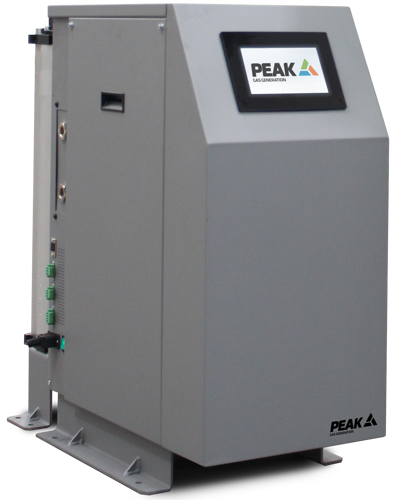
The i-Flow Mini nitrogen gas generator is perfect for businesses looking to benefit from on-site nitrogen generation with a small footprint.
On-demand nitrogen generators for coffee production
PEAK Gas Generation's products are trusted by many in the food and beverage sector, known for their quality and product performance. Built upon decades of engineering expertise in gas generation solutions, PEAK combines expert product- and application knowledge with a strong international support network that ensures help is always within reach. Through our global team of over 150 dedicated professionals and select group of trusted partners, we ensure every project is executed seamlessly and delivered in accordance with customer requirements.
Frequently Asked Questions
Get in touch to discuss your project
Interested in exploring on-site nitrogen generation for food packaging applications? Contact PEAK Gas today to discover more about our i-Flow range.
Related Items

We address the misconceptions around using a nitrogen generator for gas assisted injection molding.

Find out how manufacturing applications benefit from a scalable and dependable centralized nitrogen source.

Displacing oxygen with nitrogen is a simple solution for enhancing the shelf life of food products.